

Brighter means more mapped work.
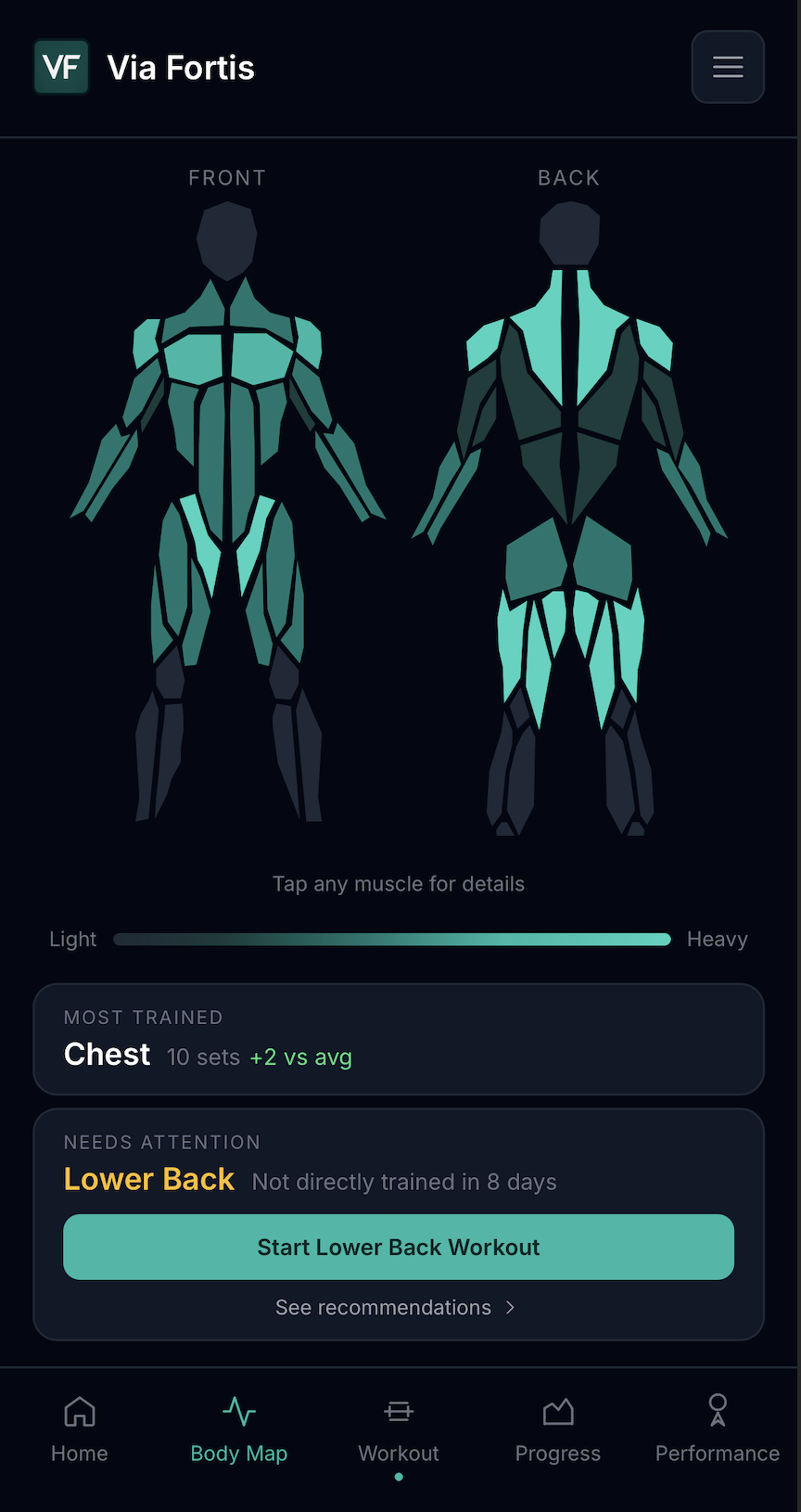
In Via Fortis Body Map, the product's muscle heat map view, brighter areas received more mapped training from the lifts and working sets in the selected window.
Learn: Muscle Heat Maps
What the Colors Mean
A muscle heat map shows mapped training work by muscle group over a chosen time window.
It can help you see what your workouts covered, but it should not be confused with soreness, recovery, pain, or confirmed muscle growth.
Inputs
In Via Fortis, this view is called Body Map. It is the app's workout body map and muscle heat map view: a visual layer built from logged lifts, working sets, exercise mappings, and the time window you are reviewing.
Each exercise is mapped to primary and supporting muscles. A targeted lift may light up one area more directly. A compound lift may contribute across several areas at once.
In Via Fortis Body Map, the product's muscle heat map view, brighter areas received more mapped training from the lifts and working sets in the selected window.
A quiet area does not automatically mean a problem. It means that muscle received less mapped work in that window and may be worth reviewing.
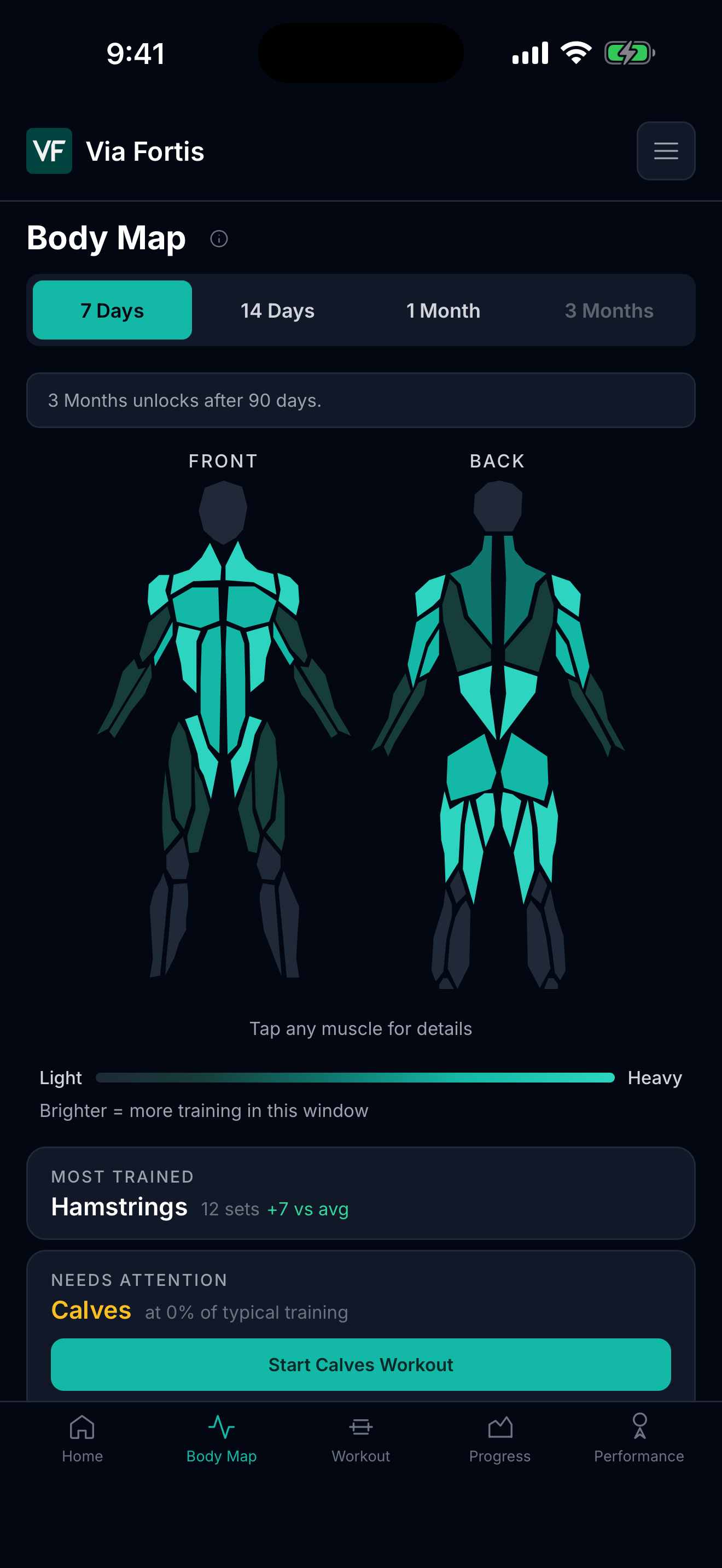
Logged Work
The app uses the exercise you logged and its muscle mapping to estimate which areas were trained directly or supported by the movement.
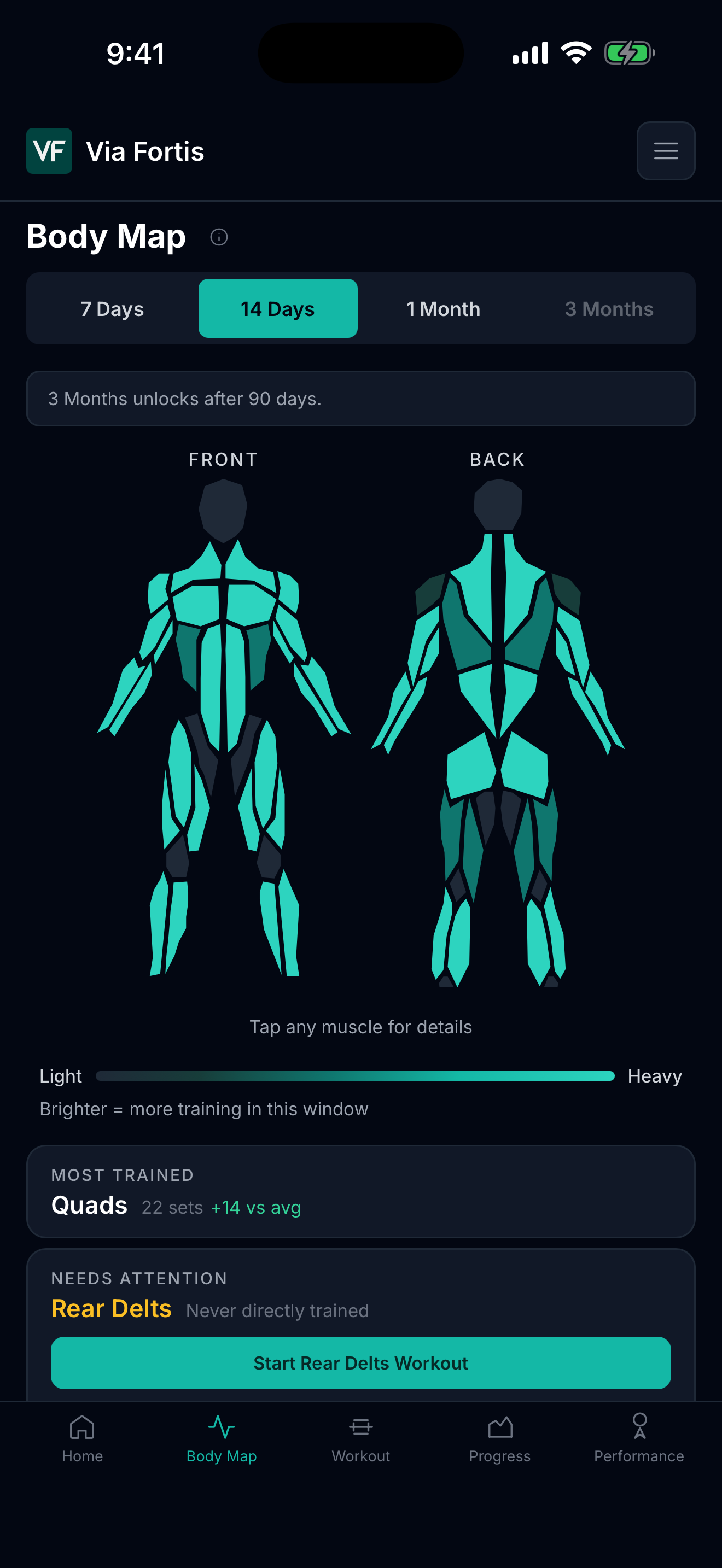
Time Window
Short windows show recent training. Longer windows help reveal whether a missed area is a one-off or a recurring pattern. This is where muscle heat map apps differ most.
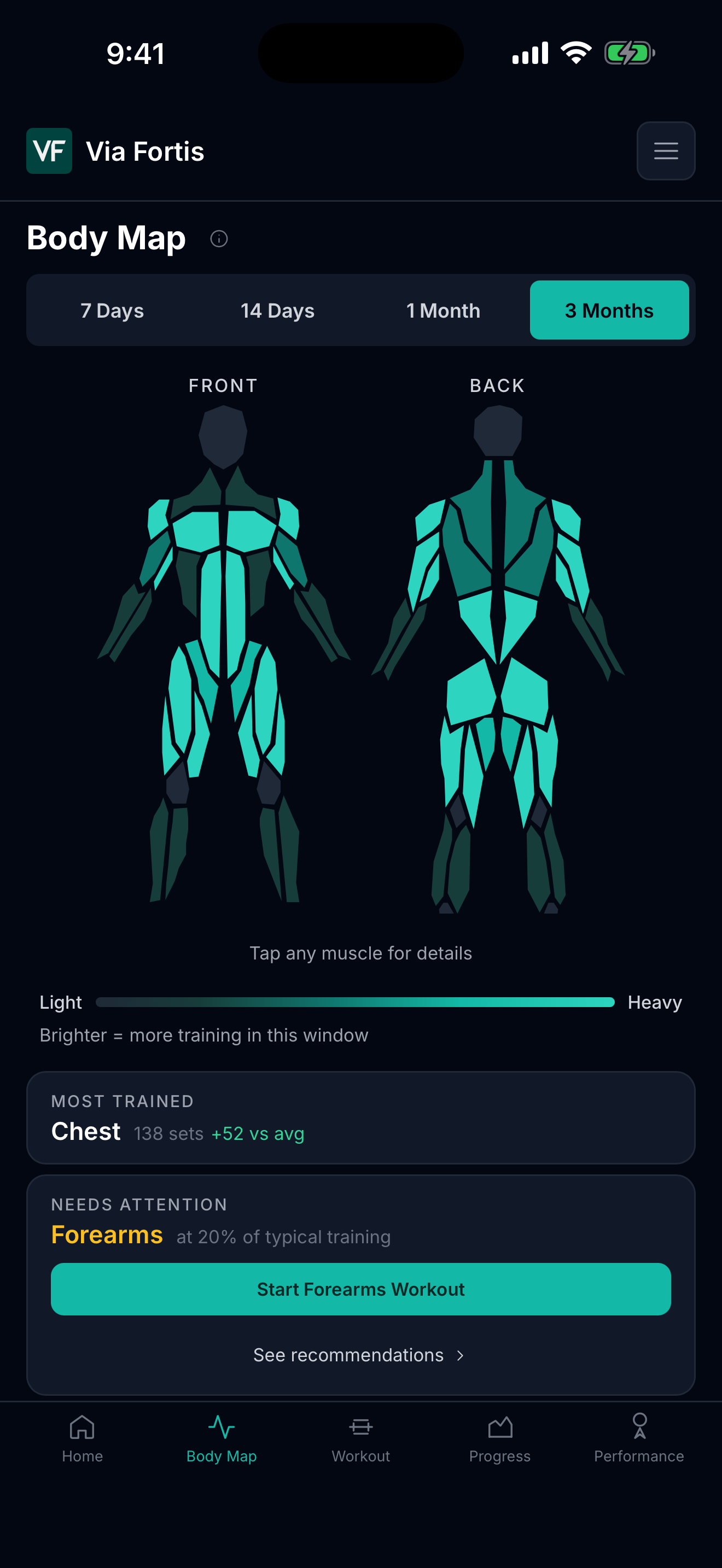
Interpretation
The map gives you a clearer view of the work. You still decide whether the pattern fits your goals.
What It Does Not Show
Muscle coverage does not claim to measure soreness, readiness, fatigue, injury risk, or whether a muscle grew. It shows how your logged work mapped across muscle groups.
That makes it useful as a review layer: a way to see the shape of your training before deciding what to keep, add, or adjust.
FAQ
Via Fortis Body Map uses logged exercises, working sets, exercise-to-muscle mappings, and the selected time window.
No. It shows mapped training coverage. It does not measure soreness, pain, recovery, or readiness.
Large movements usually involve primary movers and supporting muscles. A good heat map should reflect that instead of treating every exercise as if it only trained one area.
Download Via Fortis on iPhone, or try the free audit first to preview muscle coverage from your current program, typical training week, or recent workouts.